Features & Usage

Projects

View source ↗

A Project is a dedicated workspace within Claude that groups multiple chats around the same goal, together with a shared project knowledge base and custom instructions that apply to every chat in that project. Each project has its own chat history, separate from regular chats and from other projects.
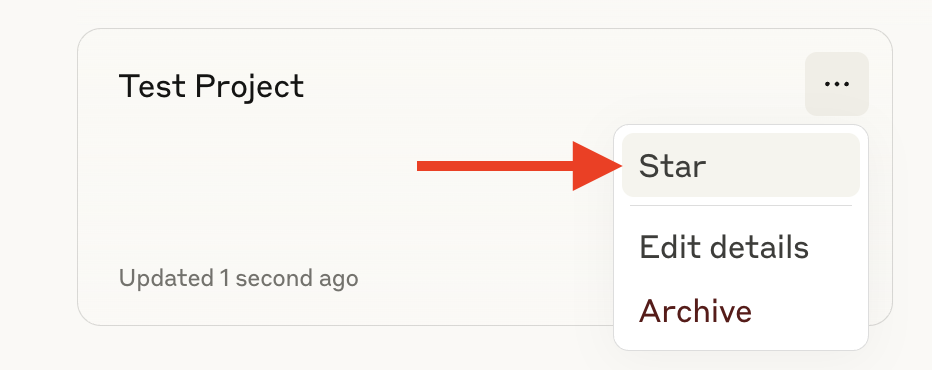
Creating a project: go to claude.ai/projects (or hover over the left sidebar and select "Projects"), click "+ New Project", and give it a name and short description (note: Claude does not read this description — it's just an internal note for users). Free accounts are limited to a maximum of 5 projects; paid plans (Pro, Max, Team, Enterprise) have no limit on the number of projects.

Project knowledge: in the right-hand panel of a project, click the "+" to upload documents, text, code snippets, or other files — Claude will use these as context for every chat in the project. Conversation context in one chat is not automatically shared with other chats in the same project unless it's added to the knowledge base. On paid plans, when project knowledge approaches the context window limit, Claude automatically switches on RAG (Retrieval-Augmented Generation) mode, expanding the project's storage capacity by up to 10x while maintaining response quality; if the data drops back below the threshold, the system may automatically switch back to loading context directly.
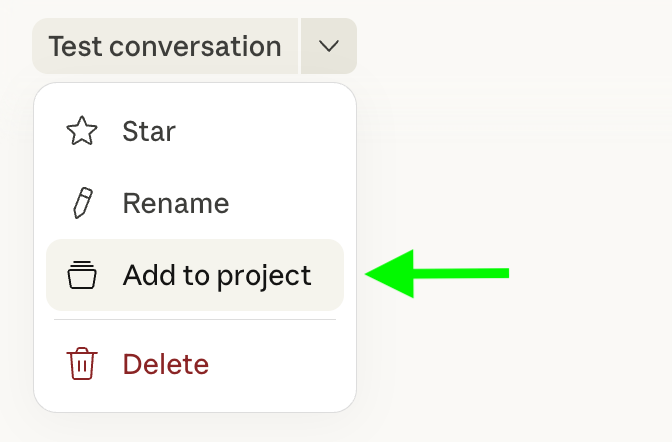
Project instructions: click "Set project instructions" to define tone, area of expertise, response rules, etc., applied consistently across every chat in the project — very useful for giving each department its own response "framework."
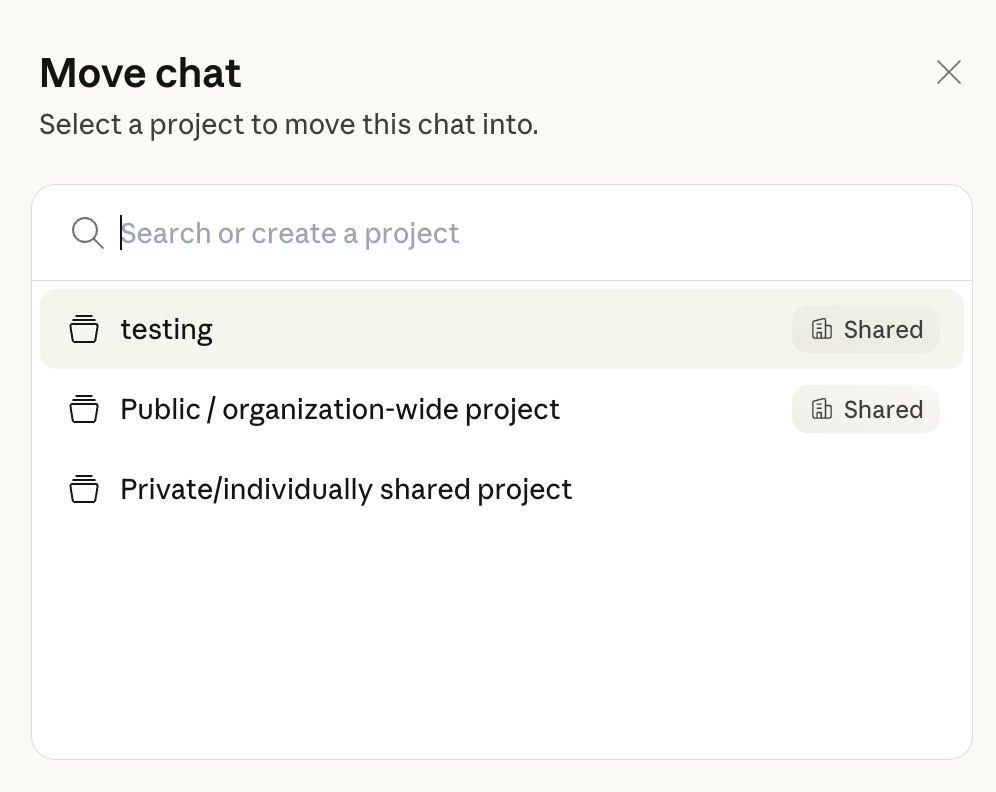
Source: What are projects? · How can I create and manage projects? · RAG for projects
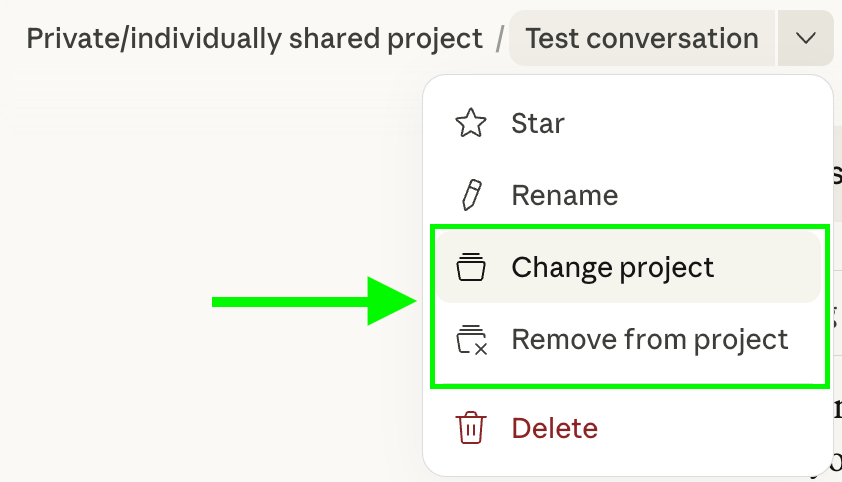
Sharing projects within the organization (Team/Enterprise only, applicable to Bluemarq): each project can be in one of two visibility modes:

ModeWho can see itNotes
PrivateOnly the creator and explicitly invited membersInvite by name/email or paste a bulk list of emails; permissions are either "Can view" (view, chat within the project, cannot edit) or "Can edit" (edit instructions, manage knowledge, add/remove members)
Organization-wide (Public)Every member of the Bluemarq organization, visible via the "Team" tab in ProjectsIndividual chats inside a public project remain private unless explicitly shared

Whether organization-wide project creation is allowed is controlled by the org admin at the organization settings level — if the admin disables this option, users can only share projects via individual invitations (private), not publish them to the whole of Bluemarq. When a project is archived, all sharing permissions are reset to private for security.

Source: Manage project visibility and sharing
Recommendation for Bluemarq: organize each Project around a specific workflow or team (e.g., "Contracts — Legal," "Monthly Financial Reports," "Marketing — Q3 Content") rather than lumping everything into one large project, so that knowledge and custom instructions stay closely aligned with their intended use. For sensitive data (contracts, financial figures, customer/employee personal information): keep the project private, invite only the people who need it, prefer granting "Can view" access, and reserve "Can edit" for a small number of responsible individuals. Bluemarq administrators should review the organization settings to check whether "organization-wide public projects" is enabled, and remind staff not to upload confidential documents into the knowledge base of projects that are shared organization-wide.
↑ Back to top

MCP & Custom Connectors

View source ↗

Model Context Protocol (MCP) is an open standard created by Anthropic that lets Claude connect to external tools and data sources (internal databases, APIs, in-house SAP/ERP systems, etc.). On Claude Enterprise, MCP appears as Connectors under Settings.

There are two types of connectors to distinguish clearly:

  • Built-in connectors: sourced from Anthropic's Connectors Directory — verified integrations such as Google Drive, Slack, Microsoft 365, Linear, etc., working across claude.ai, Claude Desktop, and the API.
  • Custom connectors via a remote MCP server: the organization points to its own MCP server running on the internet (built by Bluemarq's dev team or a third party), for example to connect to an internal system. Claude calls this server from Anthropic's cloud infrastructure, not from the user's machine — so the server must be public on the internet (not behind an internal VPN/firewall) and must allow Anthropic's IPs access.

The process for enabling a connector for the organization is a two-step process, mirroring Enterprise's general permission model:

  1. Enable at the organization level: only the Owner/Primary Owner goes to Organization settings > Connectors, and chooses "Browse connectors" (built-in) or "Add > Custom > Web" (enter the MCP server URL, with optional OAuth Client ID/Secret under Advanced settings). Enabling a connector does not automatically grant anyone permission to use it — each user still has to authenticate (OAuth) themselves via Customize > Connectors.
  2. Assign permissions via Custom Role: in the role editor (Admin settings > Roles), the Connectors tab lets you set "Always allow / Needs approval / Blocked / Custom" for each connector and each specific tool; the "All connectors" row sets the shared default. Note: connector permissions only apply to members with a Custom role — members assigned the built-in User/Admin/Owner roles will see every connector enabled at the organization level, unrestricted by the role editor.

For authentication, most connectors use OAuth: the user logs in through the service's own page, grants specific permissions without sharing their password, and can revoke access at any time.

For Bluemarq's dev team: MCP is also the standard way for Claude Code and the Claude API to connect to external tools — via the claude mcp add command or a .mcp.json file (project-scoped, and can be checked in to share configuration across the team), independent of the Connectors configuration on claude.ai.

Security recommendation for Bluemarq: Only add remote MCP servers from trusted, verified sources. Because Claude calls that server from Anthropic's cloud (meaning data will leave the internal network en route to the destination server), never point a custom connector at a server that hasn't gone through internal security review. Anthropic warns that malicious MCP servers can inject "hidden instructions" (prompt injection) that cause Claude to take unintended actions. For a 25-seat organization: (1) have the Owner carefully review before enabling any custom connector at the organization level, (2) use Custom Role + the Connectors tab to restrict to "Needs approval" or outright block tools capable of writing/modifying/deleting data (especially with SAP/ERP data), and (3) don't enable a custom connector for all 25 users at once — pilot it with a small group first.

Source: Get started with custom connectors using remote MCP

Source: Use connectors to extend Claude's capabilities

Source: Set up role-based permissions on Enterprise plans

Source: Connect to MCP servers — Claude Code Docs

↑ Back to top

Workspaces (Console/API)

View source ↗

Terminology note: "Workspace" here refers to the partitioning feature in the Claude Console (the developer/API platform at console.claude.com) — entirely different from "Organization" on claude.ai (where members chat and use Projects). This section only matters if the Bluemarq team calls the API/builds applications on the Claude platform. If Bluemarq only uses claude.ai for chat, this section can be skipped.

A Workspace in the Console is a logical group used to separate API keys, members, and resource limits by project, environment (dev/staging/production), or by team/department. Every organization always has a Default Workspace that cannot be renamed, archived, or deleted. There is a maximum of 100 workspaces per organization (archived workspaces do not count toward this limit). Each workspace has an ID in the form wrkspc_...; the Default Workspace alone has no ID and does not appear in listings via the API.

API keys are locked to a single workspace: a key created in a given workspace can only access that workspace's resources (Files API, Message Batches, Skills API, prompt cache, etc.) and cannot be moved to another workspace.

Roles within a workspace:

RolePermissions
Workspace UserWorkbench access only, cannot manage keys
Workspace Limited DeveloperCreate/manage API keys, use the API; cannot view session tracing or download files
Workspace DeveloperCreate/manage API keys, full API access
Workspace AdminFull control over workspace configuration and members
Workspace BillingView workspace billing information (inherited automatically from the organization-level billing role, cannot be assigned manually)

Organization admins automatically hold the Workspace Admin role in every workspace; organization billing members automatically hold Workspace Billing in every workspace. Organization-level Users/Developers must be added manually to each individual workspace.

Spend and rate limits per workspace: on the Limits tab, admins can set requests/minute, input tokens/minute, and output tokens/minute limits per model tier, along with monthly spend alert thresholds. Workspace limits can only be set lower (never higher) than the organization-level limit; if none is set, the workspace shares the organization's limit. Custom limits cannot be set for the Default Workspace. The auto-created "Claude Code" workspace (created when a member signs in to Claude Code with a Console account) is the only workspace that supports per-user monthly spend limits.

To track and attribute API costs by project/team, use the Usage and Cost API filtered by workspace_ids[], or manage workspaces/members/roles programmatically via the Admin API (requires an Admin API key sk-ant-admin...) at /v1/organizations/workspaces.

Source: Workspaces – Claude Platform Docs; Creating and managing Workspaces – Claude Help Center; Workspaces – Claude API Reference

↑ Back to top

Skills (Claude's Skills)

View source ↗

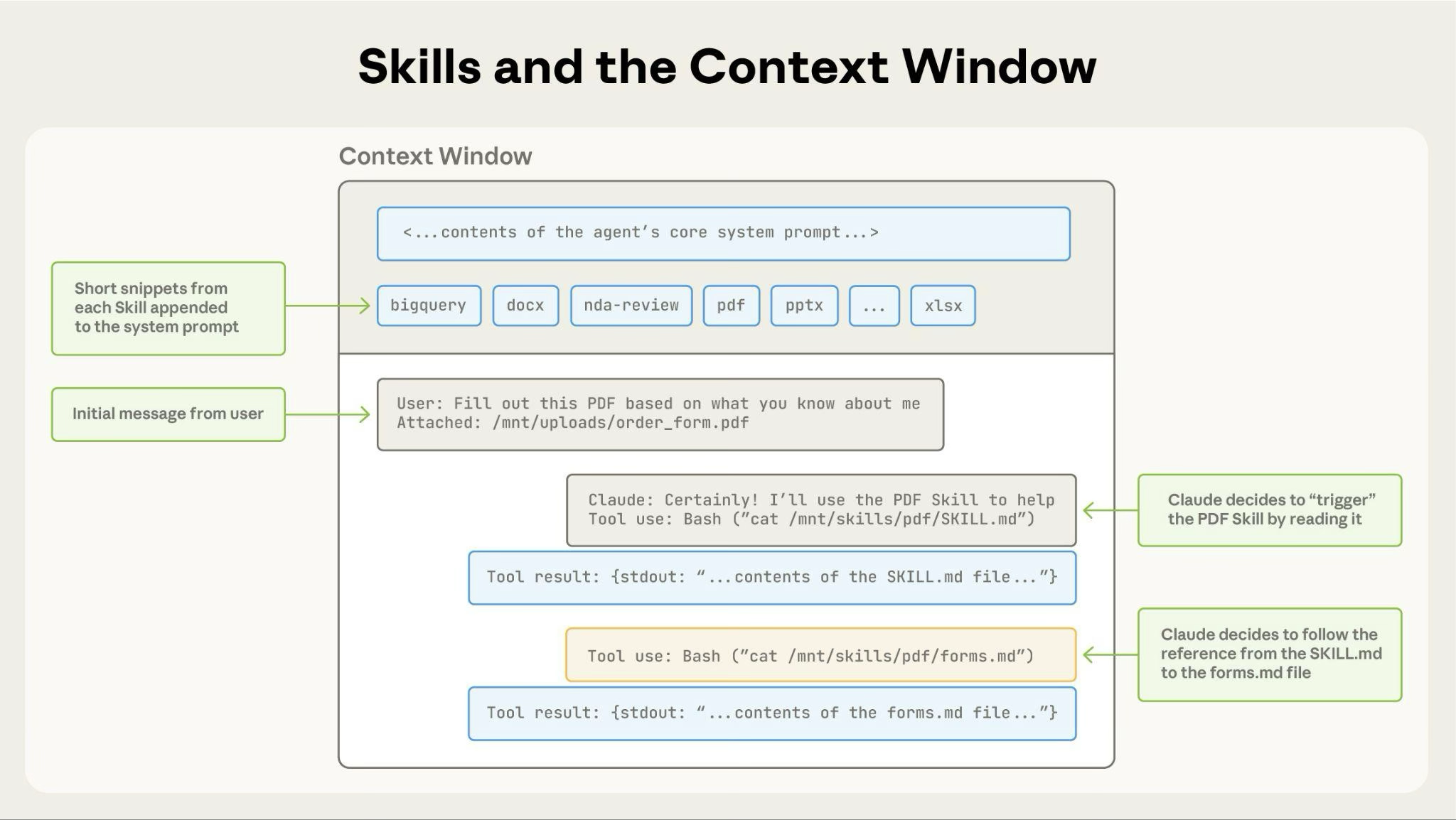
A Skill is a package of instructions (SKILL.md) along with optional resources — executable scripts, templates, reference documentation — that Claude automatically loads into context when relevant, in order to carry out a task or workflow consistently, instead of having to repeat those instructions in every conversation. Skills use a "progressive disclosure" mechanism: only the name and description (about 100 tokens) are preloaded; the full SKILL.md content is only read when a user's request matches the description; scripts and reference documents are only accessed when actually needed. Because Skills run in an environment with code execution privileges, Claude can read files, run scripts, and produce documents instead of only responding with text.

There are two types: Skills provided by Anthropic (PowerPoint, Excel, Word, PDF) — usable immediately with no configuration — and custom/organization Skills, created by Bluemarq or by individual employees to package internal workflows, report templates, or business-specific knowledge.

PlatformSkill typeSharing scopeCentralized administration
claude.aiBuilt-in + Custom (upload a .zip file)Personal Skill: usable only by the uploader. Skill provisioned by an Owner: entire organizationYes — Organization settings > Skills, only Owners can add/remove organization Skills
Claude CodeCustom only (a folder containing SKILL.md)Personal (~/.claude/skills/) or project-level (.claude/skills/), shareable via PluginNot via Console — managed through Git/internal processes
API / Agent SDKBuilt-in + Custom via Skills APIEntire API workspaceVia the /v1/skills endpoint

On claude.ai, custom Skills are not synced across platforms — a Skill uploaded on claude.ai does not automatically appear on the API or in Claude Code. Enabling Skills follows two steps: first, the Owner must enable Code execution and file creation and Skills at the organization level (Organization settings > Skills) — if code execution is disabled, Skills will not work; then, on the Enterprise plan with custom role-based permissions, enabling it at the organization level is only a necessary condition — the actual access for each group of staff must still be granted separately via the Capabilities tab of the role assigned to that group (an additive model: having it in any single role is sufficient).

Users need no special action to invoke a Skill — Claude automatically activates it when the Skill's description matches the request; users can also invoke it directly by name ("use my brand guidelines skill"). Individual Skills can be turned on/off per user under Customize > Skills; Skills provisioned by the organization are enabled by default for everyone, but each member can still turn them off individually.

Source: Agent Skills — Claude Docs

Governance and security: because a Skill can contain executable code (.py, .sh, .js scripts) and reference MCP servers, a malicious Skill could cause Claude to call tools or execute commands for unintended purposes, leading to data leaks or unauthorized access. Anthropic recommends using Skills only from trusted sources (self-created or provided by Anthropic), reviewing the entire contents of a Skill's directory (SKILL.md, scripts, attached resources) before deployment, and paying particular attention to patterns of outbound network calls, hard-coded credentials, and unusual instructions asking Claude to bypass safety rules or hide actions from the user.

Source: Skills for enterprise — Claude Docs, Provision and manage skills for your organization — Claude Help Center

Governance recommendation for Bluemarq (25 seats): before enabling organization Skills, only grant permission to create/upload organization Skills to the Owner (this is Anthropic's default policy — only Owners can add/remove organization-wide Skills). For every custom Skill — including those written by internal staff — apply a review process before deployment: read the entire SKILL.md and accompanying scripts, verify there are no outbound network calls or hard-coded credentials, and keep the role of the Skill author separate from the role of the Skill reviewer. Only enable Skills at the organization level once this vetting process is in place, and only extend role/group scope to the departments that genuinely need it, rather than enabling it broadly for all 25 users.
↑ Back to top

Claude Cowork

View source ↗

Claude Cowork is a task-based working mode, using an agentic architecture similar to Claude Code but without requiring a terminal. Instead of answering questions one at a time, Claude can take on a multi-step task and act autonomously on the user's computer, files, and browser to get the work done, even after the user has stepped away — the session runs remotely and follows the user across desktop, web, and mobile.

Typical tasks according to official documentation: reorganizing the Downloads folder by type/date, creating spreadsheets with formulas, drafting documents/presentations, and synthesizing research from multiple sources into a report. Users simply describe the desired outcome and Claude carries it out, with three approval modes: Manual, Auto, and Skip.

Requirements: a paid plan (Pro, Max, Team, Enterprise), an internet connection; access to local files requires Claude Desktop (latest macOS/Windows build).

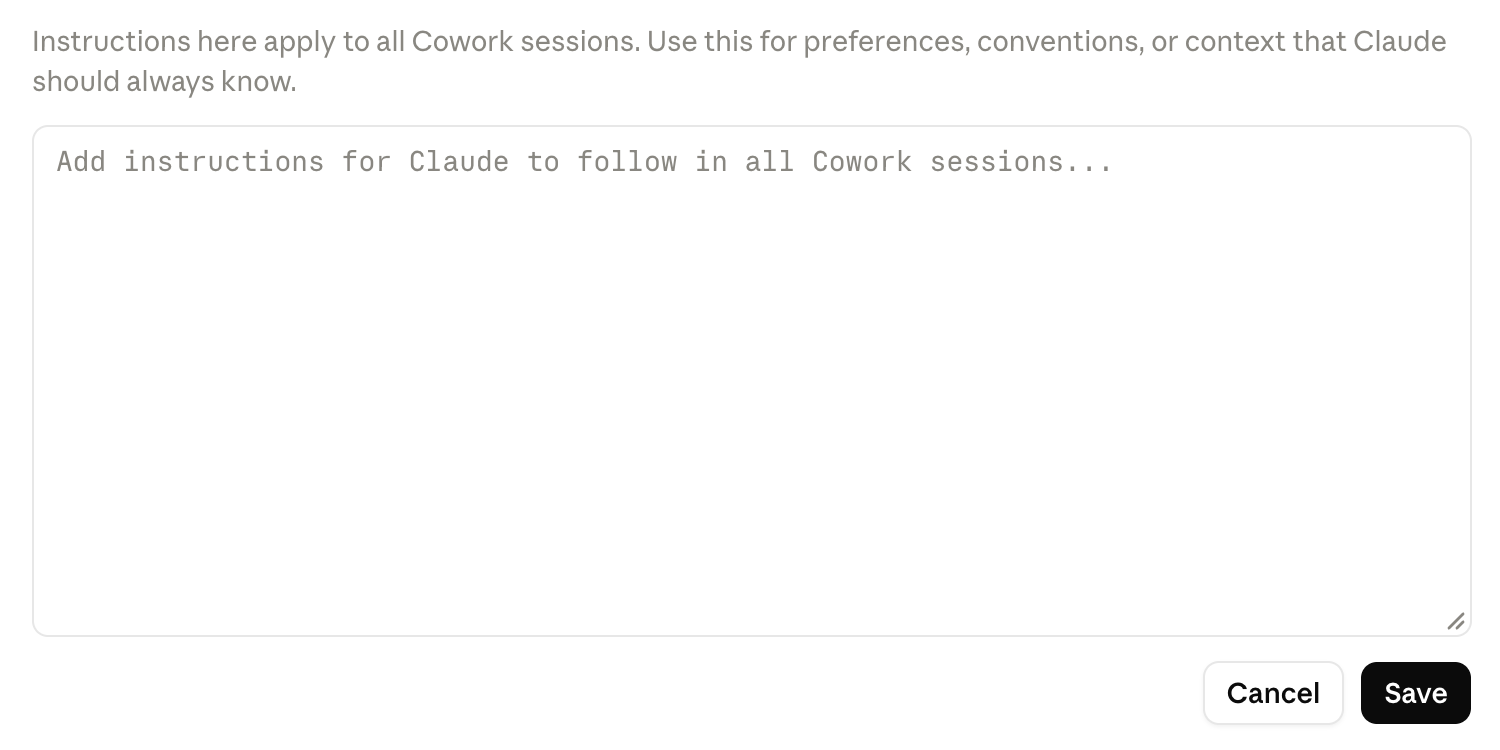
Enabling/disabling and permissions: Cowork is enabled by default for organizations, but Owners can disable it organization-wide under Organization settings > Capabilities. On the Enterprise plan, access is controlled in two layers: (1) the organization-level switch must be on, and (2) the member's custom role must grant the "Claude Cowork" capability. Permissions are additive — if any of a member's roles grants Cowork, they have access. This lets admins use groups (including SCIM-synced groups) plus custom roles to enable Cowork for specific teams rather than the entire 25-seat organization. Separately, allowing connector tools automatic write permission ("Always allow") is a distinct organization-level setting, off by default, and the stricter restriction layer always wins even if a custom role grants the permission.

Usage consumption: Cowork is classified as "high token intensity," along with Claude Code — a Cowork task can consume far more tokens than an ordinary chat, since it runs multi-step workflows, sub-agents, and Skills behind the scenes. Usage draws from the same pool as Claude.ai chat and Claude Code, so heavy Cowork use can affect limits elsewhere; admins should refer to the Enterprise consumption guide to set spend limits at the organization/group/user level.

Security: because Claude can read content and take actions, the main risk is prompt injection from external content. Anthropic recommends not granting access to sensitive files (financial data, etc.), only allowing access to trusted websites, blocking sensitive applications (banking, healthcare) when using computer-use, monitoring for unusual behavior, and switching to manual approval when a task touches sensitive data/accounts.

Recommendation for Bluemarq: Pilot Cowork with a small group (e.g., 3–5 people) before rolling it out to all 25 seats. Create a dedicated group and custom role with the "Claude Cowork" capability, keep the approval mode set to Manual, and disable "Always allow" for write-capable connectors during the trial period, while setting a group-level spend limit to monitor actual token consumption before scaling up.

Source: Use Claude Cowork on Team and Enterprise plans · Get started with Claude Cowork · Manage custom roles on Enterprise plans · Set up role-based permissions on Enterprise plans · Claude Enterprise consumption guide · Use Claude Cowork safely

↑ Back to top

Design & Artifacts (Visual Design)

View source ↗

Anthropic provides two capabilities related to "design": Artifacts — a content-creation feature available in every version of Claude — and Claude Design, a separate Anthropic Labs product currently in research preview, focused on creating highly polished designs, prototypes, and slides.

Artifacts

Artifacts is a separate content frame that Claude creates when content is substantial, self-contained, and likely to be edited or reused by the user later (typically over 15 lines). Artifacts can be Markdown documents, code snippets, single-page HTML, SVG images, diagrams/flowcharts, or interactive React components — displayed live in a separate window next to the conversation.

  • Code execution and file creation must be enabled in Settings > Capabilities (or Organization settings > Capabilities for admins) to use Artifacts.
  • Edit by asking Claude via chat, or highlight text and select "Edit with Claude" for Markdown documents; previous versions can be reviewed.
  • You can view the source code, copy, or download an artifact; multiple artifacts can exist side by side within a single conversation.

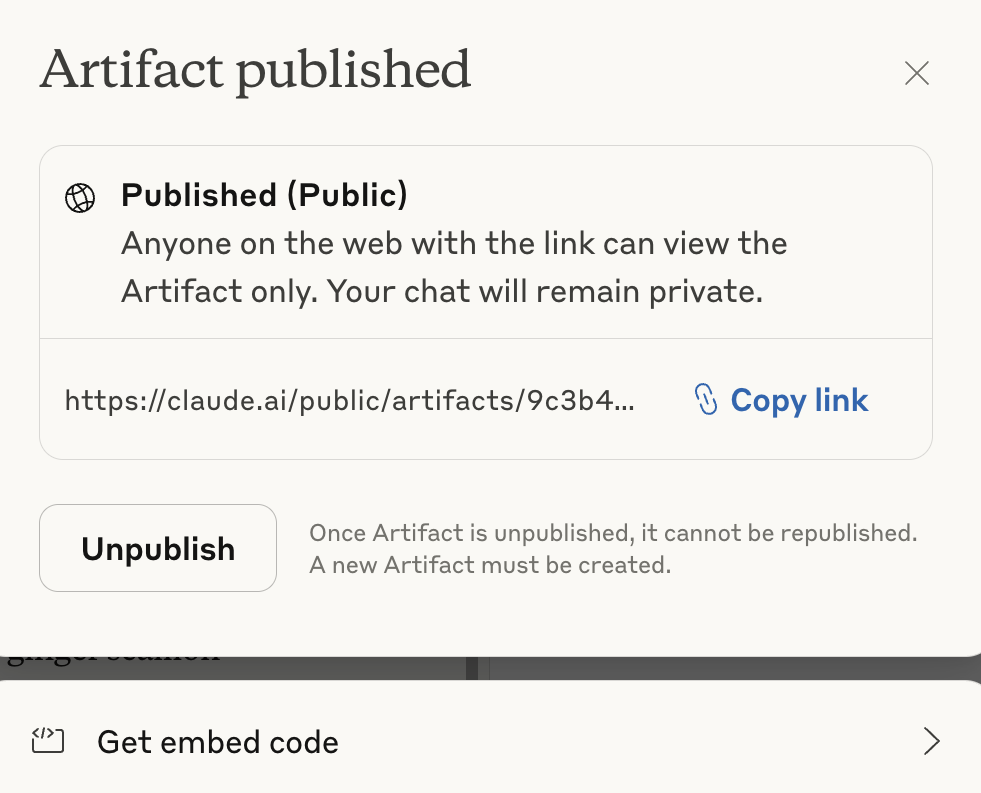
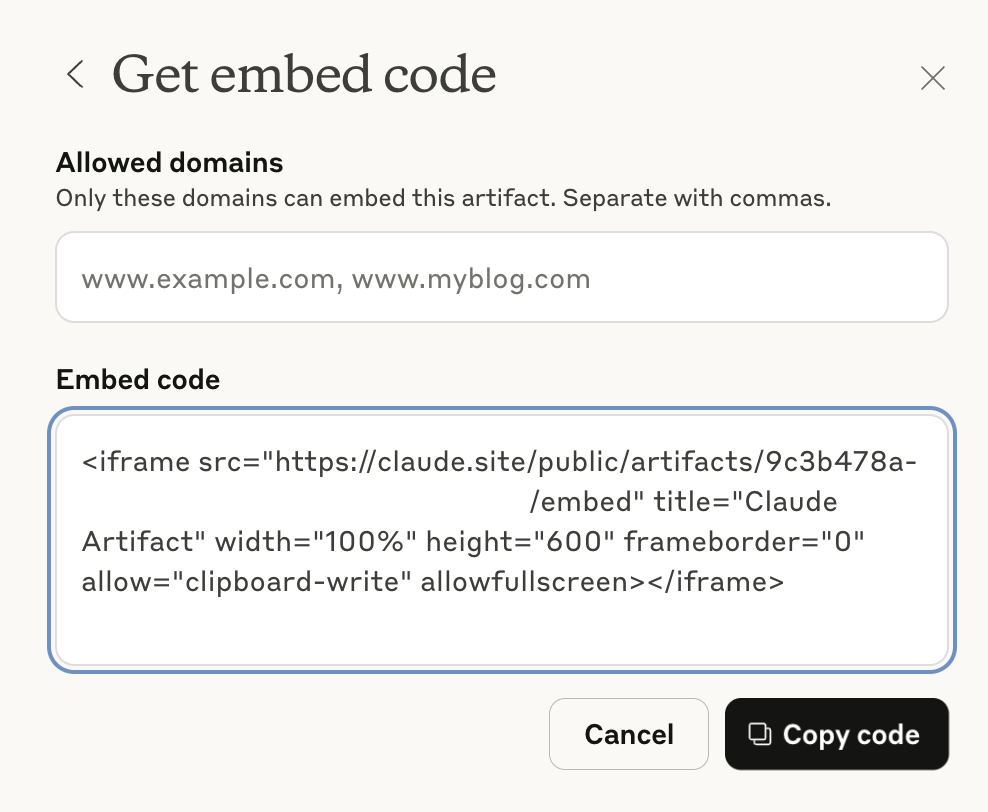
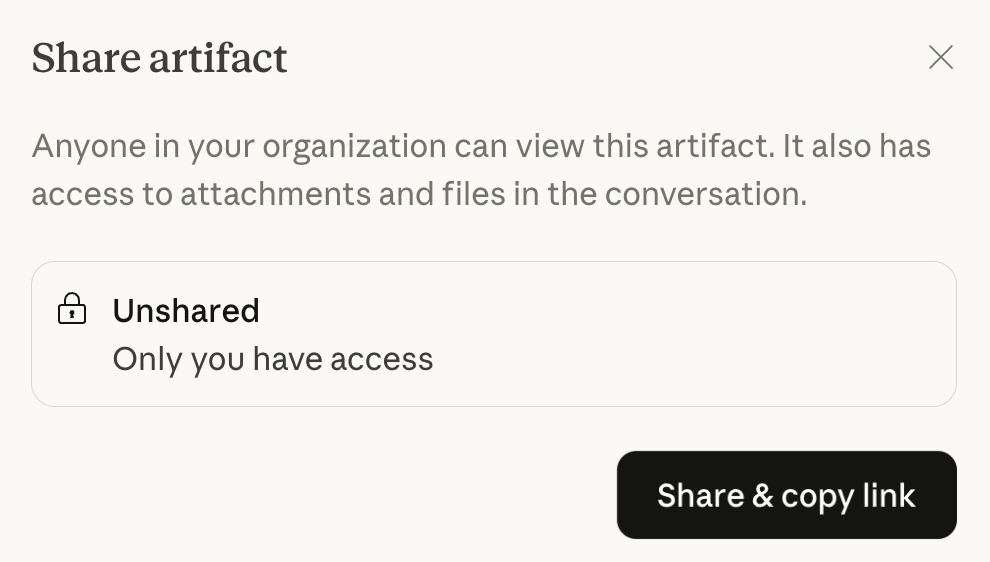
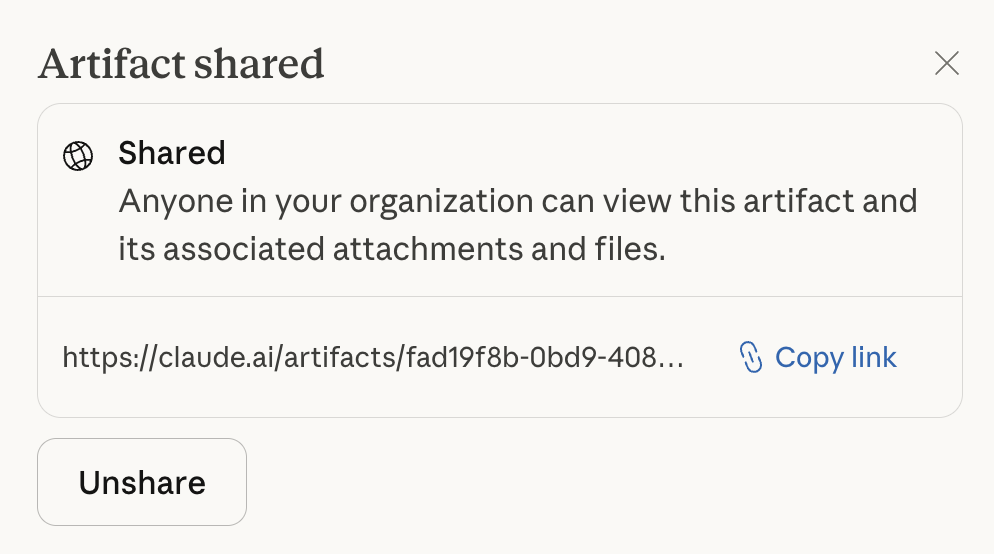
Sharing within the organization (Team/Enterprise plans such as Bluemarq): open the artifact, select the correct version, click Share, then Share & copy link. The link is only accessible to logged-in members within the same organization; if the artifact was created in a Project, viewers also need access to that Project. Important note: anyone the artifact is shared with will be able to see all files/attachments in the original conversation, so think carefully before sharing a conversation containing sensitive documents. Artifacts can also be Published as a public link (viewable/interactive by anyone, even without an account) and can be removed (Unpublished) at any time, but once unpublished that same artifact cannot be republished.

Claude Design

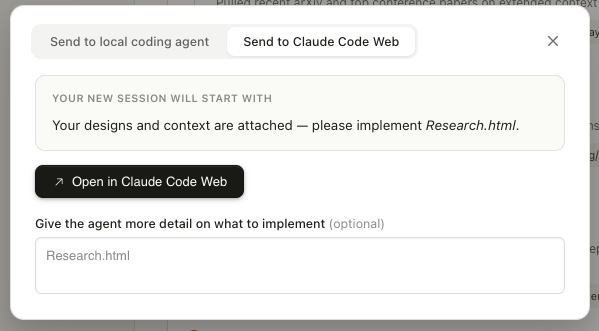
Claude Design (claude.ai/design or the sidebar in Claude Desktop) uses Claude Opus 4.7 to create interactive prototypes, slides, and one-pagers through a chat interface on the left and a visual canvas on the right. Users can provide context via screenshots, documents (DOCX, PPTX, XLSX), source code, or the "web capture" tool to pull in a website's actual interface. Claude can build and apply the organization's design system (colors, typography, components) to every subsequent project. Refinement happens in three ways: chat (for large structural changes), inline comments on individual elements, or direct edits on the canvas. Once a design is ready to become software, it can be handed off to Claude Code for continued development.

For Enterprise plans like Bluemarq: Claude Design is disabled by default; the organization administrator must enable it manually in Organization settings. There is a Design Admin role that lets an admin approve a standard design system and lock editing so that all output follows the company's brand identity. Claude Design usage counts against the shared usage limit alongside chat, Claude Code, and Cowork — it has no separate limit of its own.

Real-world example for Bluemarq: A marketing employee needs to quickly put together a landing page introducing a new product for an internal presentation. They open Claude Design, upload a few screenshots of Bluemarq's current website, and describe the desired content (headline, layout, target audience). Claude produces a visual canvas using the correct brand colors and fonts (if a design system has already been set up), the user leaves inline comments to adjust buttons and spacing, then exports a PPTX file for presentation or shares an internal (view-only) link for colleagues to give feedback before handing it off to the engineering team to bring into Claude Code.

Source: Get started with Claude Design · Introducing Claude Design by Anthropic Labs · What are artifacts and how do I use them? · Publish and share artifacts

↑ Back to top